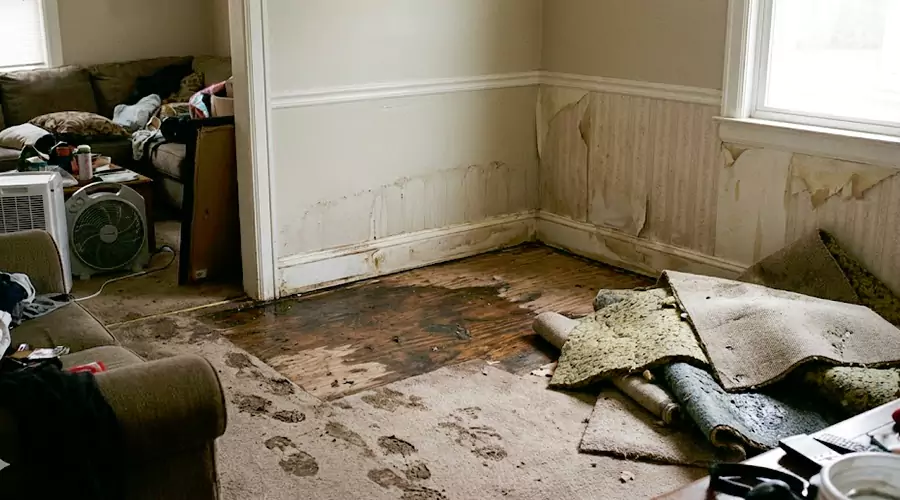



Water damage to carpet is a common problem after leaks, appliance failures, or flooding — but not all carpet damage is permanent. Whether you can dry and restore your carpet or need to replace it (and the padding underneath) depends on several important factors, including the water source, duration of exposure, contamination level, and how quickly you start drying. Making the right decision can save you money, protect your family’s health, and prevent mold growth.
Carpet is made of multiple layers: surface fibers, backing, and padding underneath. When water soaks these layers:
Without fast extraction and drying, moisture trapped deep inside can lead to odor, mold growth, structural damage, and health risks. Mold can begin growing in as little as 24–48 hours in wet carpet conditions.
Carpet exposed to clean water — like from a broken supply line or rainwater — has the highest chance of being dried and salvaged if treated quickly.
Key conditions for successful drying:
In these cases, professionals use wet/dry vacuums, industrial air movers, and dehumidifiers to extract water and dry both carpet and subfloor. Drying carpets in place is realistic when the water is still fresh and uncontaminated.
Carpet exposed to clean water for less than 24 hours has a significant chance of drying without replacement. Even padding sometimes can be dried in place when powerful equipment is used and moisture levels are monitored closely by 24 7 Restoration.
In these situations, monitoring moisture levels with meters and maintaining continuous airflow helps ensure thorough drying that won’t leave hidden damp spots.
When water contains contaminants — like grey water from appliances (Category 2) or black water from sewage or floodwater (Category 3) — restoration becomes riskier. Porous carpet fibers and padding trap bacteria and toxins, making safe sanitization difficult or impossible.
In these cases, replacement of carpet and padding is usually the safest option to protect health. Sewage backup or heavily contaminated floodwater almost always mandates disposal of carpet and pad due to pathogen risk.
Even clean water loses its “clean” status if it sits for too long. After about 48–72 hours, regardless of the water source, mold and bacteria begin to grow, and the carpet backing and padding hold moisture too deeply for reliable drying.
In these situations, replacement — especially of the padding — is often needed to prevent future problems like odors or mold recurrence.
If you see mold growth, smell persistent musty odors after attempted drying, or notice delamination (backing separating from fibers), the carpet and padding likely cannot be salvaged safely and should be replaced.
Visible mold is a major sign that microbes have penetrated deep into fibers and backing — places cleaning and drying alone can’t reach.
Carpet padding typically absorbs water faster and holds it longer than the carpet itself. Many restoration pros agree that even with clean water:
Because of this, padding replacement is common even when the carpet fibers can be salvaged.
This process can take 2–4+ days depending on the saturation and padding condition.
Replacing padding and carpet at the right time ensures a long‑term healthy floor and avoids recurring issues post‑restoration.
Here’s a quick decision guide:
| Scenario | Likely Action |
|---|---|
| Clean water leak found and treated within 24 hours | Dry & restore carpet |
| Water contaminated by grey or black water | Replace carpet + padding |
| Carpet wet over 48–72 hours | Replace padding; often carpet |
| Visible mold or persistent odor | Replace carpet + padding |
| Carpet backing delaminated | Replace carpet |
Carpet water damage isn’t always a disaster — fast response and proper drying often save the surface carpet, especially with clean water and minimal exposure time. However, padding and heavily contaminated or long‑soaked carpet are usually smarter to replace for health, odor, and mold prevention. Working with professional restoration services not only increases the chance of successful drying but also ensures the job meets industry standards for a safe, long‑lasting result.
Our certified experts are ready 24/7 to assist you with emergency restoration services.
GET A QUOTE